Future Technology 2030: Digital Trends You Must Know
The year 2030 is no longer a distant future—it is fast approaching. Over the next few years, technological advancements will accelerate at an unprecedented pace, transforming how humans live, work, communicate, and interact with the world. Technologies that are still emerging today will become mainstream by 2030, reshaping industries and redefining everyday life.
This article explores Future Technology 2030: the digital trends you must know, highlighting the most important innovations that are expected to dominate the next decade. Understanding these trends is essential not only for businesses and professionals but also for individuals who want to stay relevant in a rapidly changing digital world.
The Road to 2030: Why Technology Is Evolving Faster Than Ever
Several factors are driving the rapid evolution of technology toward 2030:
- Massive growth in computing power
- Widespread access to data and cloud infrastructure
- Advances in artificial intelligence and automation
- Global digital connectivity
- Urgent challenges such as climate change and population growth
As these forces converge, technology is no longer developing in isolation. Instead, multiple innovations are evolving simultaneously and reinforcing each other, creating exponential change.
- Artificial Intelligence Becomes the Core of Digital Life
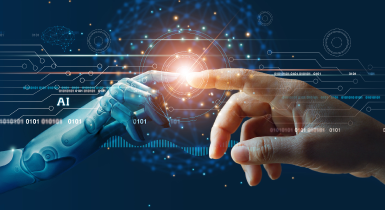
By 2030, Artificial Intelligence (AI) will no longer be a supporting tool—it will be the foundation of digital systems across all industries.
AI Everywhere
AI will be deeply integrated into:
- Smartphones and personal devices
- Smart homes and cities
- Healthcare systems
- Education platforms
- Business decision-making
AI systems will move beyond simple automation and become capable of understanding context, emotions, and complex human behavior.
Impact on Daily Life
In 2030, AI assistants will:
- Manage schedules, finances, and health routines
- Provide real-time recommendations
- Act as personal advisors and digital companions
AI will transform how humans interact with technology, making digital experiences more personalized and intuitive.
- Automation and the Rise of Intelligent Machines
Automation will reach a new level by 2030, powered by AI, robotics, and advanced sensors.
Smart Automation Across Industries
By 2030:
- Factories will operate with minimal human intervention
- Logistics and supply chains will be largely automated
- Customer service will rely heavily on AI-driven systems
Automation will increase productivity, reduce costs, and improve accuracy across industries.
Human–Machine Collaboration
Rather than replacing humans entirely, intelligent machines will work alongside humans. Humans will focus on creativity, strategy, and emotional intelligence, while machines handle repetitive and data-intensive tasks.
- The Future of Work: Digital, Flexible, and Global
Technology in 2030 will fundamentally redefine how and where people work.
Remote and Hybrid Work as the Standard
Cloud computing, AI collaboration tools, and immersive technologies will make remote work seamless. Physical offices will no longer be mandatory for many roles.
Benefits include:
- Global talent access
- Flexible work schedules
- Reduced commuting and environmental impact
Work will be measured by results, not location.
New Career Paths
By 2030, many jobs that exist today will be transformed or replaced, while new roles will emerge, such as:
- AI specialists and ethicists
- Data analysts and cybersecurity experts
- Virtual environment designers
- Automation managers
Lifelong learning will become a necessity rather than an option.
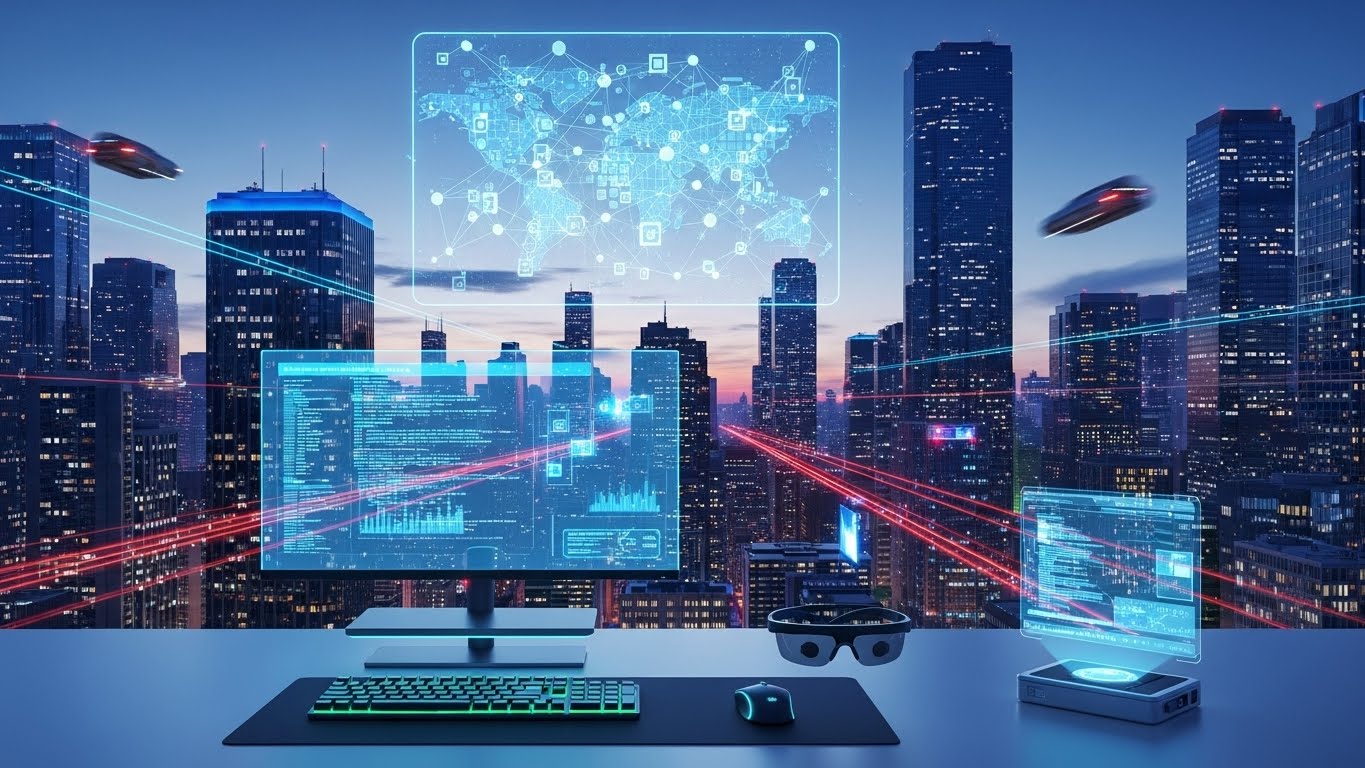
- Smart Cities and the Internet of Things (IoT)
The Internet of Things (IoT) will play a crucial role in shaping urban life by 2030.
Connected Urban Infrastructure
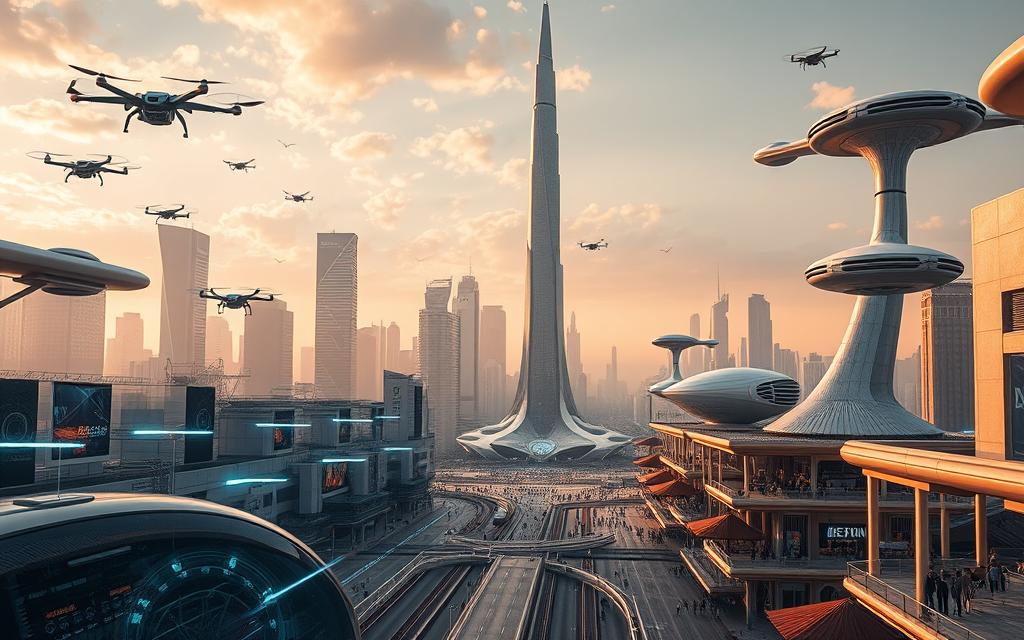
Smart cities will use IoT to manage:
- Traffic and transportation
- Energy and water usage
- Waste management
- Public safety
Sensors and connected devices will collect real-time data to optimize city operations and improve quality of life.
Smart Homes Become the Norm
By 2030, smart homes will:
- Automatically adjust lighting, temperature, and energy use
- Monitor health and safety
- Integrate seamlessly with city infrastructure
Living spaces will become adaptive environments that respond to human needs.
- Digital Healthcare and Health Technology Revolution
Healthcare will experience one of the most dramatic transformations by 2030.
Predictive and Personalized Medicine
Future healthcare systems will focus on prevention rather than treatment. AI and wearable devices will monitor health continuously and predict potential illnesses before symptoms appear.
Key technologies include:
- AI-powered diagnostics
- Wearable health trackers
- Genetic data analysis
Healthcare will become more accurate, affordable, and accessible.
Telemedicine and Remote Care
In 2030, virtual consultations and remote monitoring will be standard, especially for rural and underserved populations. Hospitals will rely more on robotics and automation for surgery and patient care.
- Biotechnology and Human Enhancement
Biotechnology will redefine human health, longevity, and capability by 2030.
Gene Editing and Regenerative Medicine
Technologies such as CRISPR will enable:
- Treatment of genetic diseases
- Tissue and organ regeneration
- Personalized medical therapies
Human lifespan may increase, and quality of life in later years will improve significantly.
Ethical Challenges
While biotechnology offers incredible benefits, it raises ethical questions about genetic modification, inequality, and access to advanced treatments. Regulation and responsible innovation will be critical.
- Virtual Reality, Augmented Reality, and the Metaverse
By 2030, immersive technologies will blur the line between physical and digital worlds.
Everyday Use of Immersive Technology
VR and AR will be used for:
- Education and training
- Remote work and collaboration
- Entertainment and social interaction
- Healthcare and therapy
The concept of the metaverse—shared digital environments—will become more practical and widely adopted.
Impact on Society
Digital identities and virtual spaces will change how people socialize, learn, and express themselves, creating new cultural and economic opportunities.
- Autonomous Transportation and Smart Mobility
Transportation systems will undergo a major transformation by 2030.
Self-Driving Vehicles
Autonomous cars, buses, and delivery systems will:
- Reduce traffic accidents
- Improve transportation efficiency
- Increase mobility for elderly and disabled individuals
Smart traffic systems will optimize movement in real time.
Sustainable Mobility
Electric vehicles, shared transportation, and smart infrastructure will reduce emissions and reshape urban planning.
- Renewable Energy and Green Technology
Climate change will drive innovation in sustainable technology by 2030.
Clean Energy Systems
Future energy solutions will rely on:
- Advanced solar and wind power
- High-capacity energy storage
- Smart energy grids
These technologies will reduce dependence on fossil fuels and lower environmental impact.
Energy Independence
Decentralized energy systems will allow communities and nations to produce and manage their own power, reshaping global energy politics.
- Quantum Computing and Advanced Digital Infrastructure
Quantum computing will move closer to practical use by 2030, unlocking new levels of computational power.
Why Quantum Computing Matters
Quantum computers will:
- Solve complex scientific problems
- Accelerate AI development
- Break traditional encryption methods
Industries such as healthcare, finance, and materials science will benefit significantly.
- Blockchain, Web3, and Digital Trust
Blockchain technology will mature by 2030, enabling decentralized digital systems.
Beyond Cryptocurrency
Blockchain will be used for:
- Secure digital identities
- Transparent supply chains
- Decentralized finance
- Smart contracts
Web3 technologies will give individuals greater control over their data and digital assets.
The Convergence of Digital Trends in 2030
What makes future technology truly transformative is convergence. AI, IoT, blockchain, and quantum computing will not exist separately—they will work together.
For example:
- AI will analyze IoT data from smart cities
- Blockchain will secure digital identities
- Renewable energy will power intelligent systems
This interconnected ecosystem will define the digital world of 2030.
Challenges and Risks of Future Technology
Despite its benefits, future technology presents significant challenges:
- Data privacy and surveillance
- Job displacement due to automation
- Digital inequality
- Ethical concerns in AI and biotechnology
Addressing these issues will require global cooperation, ethical frameworks, and inclusive innovation.
How to Prepare for Technology in 2030
Individuals and organizations can prepare by:
- Developing digital and analytical skills
- Embracing lifelong learning
- Staying adaptable and open to change
- Using technology responsibly
Adaptability will be the most valuable skill in the future.
Conclusion
Future Technology 2030 will reshape every aspect of human life. From artificial intelligence and smart cities to biotechnology and quantum computing, digital trends will redefine how we work, learn, heal, and connect.
The future is not something that simply happens—it is something we actively build. Those who understand and adapt to these digital trends will be best positioned to thrive in the world of 2030.