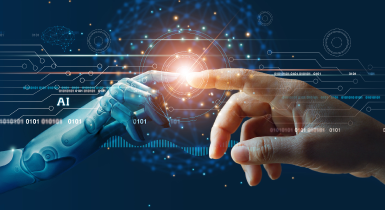
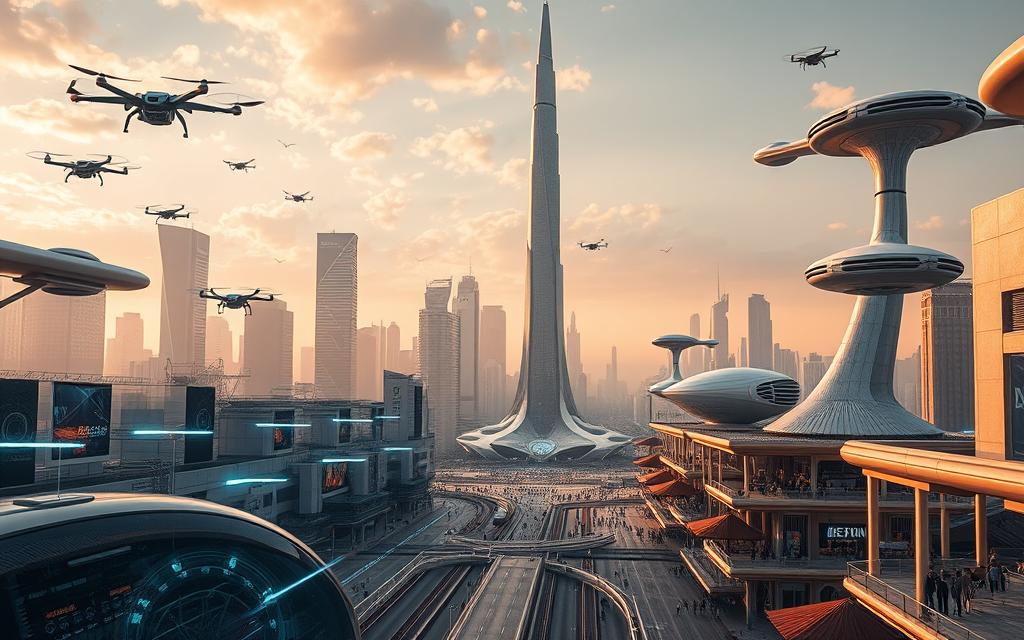
From Artificial Intelligence to Quantum Computing: The Technologies of the Future
Technology is advancing at an extraordinary speed, reshaping human civilization in ways that were unimaginable just a few decades ago. From machines that can learn and think to computers that operate beyond the limits of classical physics, the future of technology is no longer a distant vision—it is already unfolding. Among the most revolutionary developments are Artificial Intelligence (AI) and Quantum Computing, supported by breakthroughs in robotics, biotechnology, energy, and digital systems.
This article explores future technologies—from Artificial Intelligence to Quantum Computing—and explains why they are considered the foundation of the next technological era. These innovations will redefine how humans live, work, communicate, and understand reality itself.
A New Technological Age Begins
Human history is shaped by technological revolutions. The agricultural revolution transformed survival, the industrial revolution changed production, and the digital revolution connected the world. Today, humanity is entering a new phase often described as the intelligent and computational era.
This era is defined by:
- Machines that can learn, reason, and adapt
- Systems that merge physical, digital, and biological worlds
- Computing power that exceeds classical limitations
At the center of this transformation are Artificial Intelligence and Quantum Computing—two technologies that will shape the future more than any others.
Artificial Intelligence: The Foundation of the Future World
Artificial Intelligence refers to computer systems capable of performing tasks that normally require human intelligence, such as learning, problem-solving, decision-making, and understanding language.
The Evolution of Artificial Intelligence
Early AI systems were rule-based and limited. They could only perform specific tasks under predefined conditions. Modern AI, powered by machine learning, deep learning, and neural networks, can analyze massive amounts of data, recognize patterns, and improve over time.
Future AI systems will:
- Learn continuously with minimal human supervision
- Understand human emotions and context
- Make complex decisions in real time
AI is evolving from a simple tool into a collaborative intelligence that works alongside humans.
How Artificial Intelligence Will Transform Society
AI will influence almost every aspect of human life.
AI in Healthcare
AI will revolutionize healthcare by enabling:
- Early disease detection through medical imaging and data analysis
- Personalized treatment based on genetic and lifestyle data
- Robotic-assisted surgeries with higher precision
Healthcare will shift from reactive treatment to predictive and preventive care, improving outcomes and reducing costs.
AI in Education
Education will become more personalized and accessible. AI tutors will adapt learning materials to each student’s pace, abilities, and learning style. This will reduce educational inequality and improve learning efficiency.
AI in Business and Industry
Businesses will use AI to:
- Optimize supply chains
- Predict market trends
- Automate customer service and decision-making
AI-driven productivity will redefine how companies operate and compete.
Ethical and Social Challenges of Artificial Intelligence
Despite its benefits, AI raises serious concerns:
- Job displacement due to automation
- Bias in algorithms
- Privacy and surveillance risks
- Overdependence on intelligent systems
To address these challenges, governments and organizations must develop ethical guidelines and regulations to ensure AI benefits humanity as a whole.
Robotics and Intelligent Automation
AI-powered robotics is transforming the physical world. Robots are no longer limited to factories—they are entering homes, hospitals, and public spaces.
The Future of Robotics
Future robots will:
- Assist elderly and disabled individuals
- Perform dangerous jobs such as disaster response
- Collaborate safely with humans in workplaces
These robots will be adaptive, intelligent, and capable of learning from experience.
The Internet of Things and Smart Environments
The Internet of Things (IoT) connects everyday objects to the internet, allowing them to collect and exchange data.
Smart Homes and Smart Cities
In the future, IoT will enable:
- Homes that automatically optimize energy, lighting, and comfort
- Cities with intelligent traffic systems and efficient public services
- Real-time monitoring of infrastructure and environmental conditions
These smart environments will improve quality of life while reducing waste and energy consumption.
Big Data and Advanced Analytics
AI and future technologies rely heavily on data. Big data analytics allows organizations to process and interpret massive datasets.
Why Data Matters
Advanced analytics will:
- Improve decision-making in business and government
- Enable accurate predictions in healthcare and finance
- Accelerate scientific research
However, managing data responsibly will be essential to protect privacy and security.
Quantum Computing: Redefining the Limits of Computation
While AI represents intelligence, Quantum Computing represents raw computational power. Unlike classical computers that use binary bits (0 or 1), quantum computers use qubits, which can exist in multiple states simultaneously.
Why Quantum Computing Is Revolutionary
Quantum computing is based on principles of quantum mechanics such as superposition and entanglement. These principles allow quantum computers to solve certain problems exponentially faster than classical computers.
This makes quantum computing ideal for problems that are currently unsolvable.
Applications of Quantum Computing
Although still in early development, quantum computing has enormous potential.
Quantum Computing in Science and Medicine
Quantum computers will:
- Simulate complex molecules for drug discovery
- Model chemical reactions with extreme accuracy
- Accelerate research in physics and materials science
This could lead to breakthroughs in medicine, energy storage, and advanced materials.
Quantum Computing and Cybersecurity
Quantum computing will break many existing encryption systems, forcing the development of quantum-resistant security methods. This will redefine global cybersecurity standards.
Quantum Computing and Artificial Intelligence
Quantum computing could significantly enhance AI by accelerating data processing and optimization, leading to more powerful and efficient intelligent systems.
Biotechnology: Engineering the Future of Life
Biotechnology is another pillar of future technology. Advances in gene editing, regenerative medicine, and synthetic biology are transforming healthcare and agriculture.
Gene Editing and CRISPR
Gene-editing technologies allow scientists to modify DNA with unprecedented precision. Future applications include:
- Eliminating genetic diseases
- Preventing inherited disorders
- Personalized medical treatments
While ethical debates continue, the medical potential is immense.
Renewable Energy and Sustainable Technology
Technological progress must address global challenges such as climate change and energy scarcity.
The Transition to Clean Energy
Future energy systems will rely on:
- High-efficiency solar and wind power
- Advanced energy storage technologies
- Smart grids and decentralized power generation
Clean energy will reduce environmental damage and reshape global economics.
Blockchain and Decentralized Systems
Blockchain technology enables secure, transparent, and decentralized data management.
Beyond Cryptocurrency
Future applications of blockchain include:
- Secure digital identities
- Transparent supply chains
- Decentralized finance (DeFi)
- Smart contracts
These systems could increase trust, reduce corruption, and empower individuals.
The Convergence of Future Technologies
The true power of future technology lies in convergence. AI will be enhanced by quantum computing, robotics will be guided by intelligent algorithms, biotechnology will rely on advanced data analysis, and renewable energy will power smart systems.
Together, these technologies form an interconnected ecosystem that will define the future.
Impact on Work and Society
Future technologies will reshape how people work and live.
The Future of Work
Automation and AI will replace some jobs while creating new ones. Skills such as creativity, critical thinking, and emotional intelligence will become increasingly important.
Lifelong learning and reskilling will be essential for adapting to technological change.
Risks and Global Challenges
Despite their promise, future technologies present risks:
- Technological inequality between nations
- Loss of human autonomy
- Ethical misuse of powerful tools
- Overreliance on intelligent systems
Addressing these risks will require global cooperation, ethical leadership, and inclusive innovation.
Conclusion
From Artificial Intelligence to Quantum Computing, future technologies are redefining the foundations of human civilization. These innovations will not only change how machines work—they will transform how humans think, learn, heal, and interact with the world.
Technology itself is neutral. Its impact depends on how humanity chooses to develop and use it. If guided responsibly, these technologies can create a future that is more intelligent, sustainable, and humane.